
China Top LED Wall Strip Lights Manufacturers
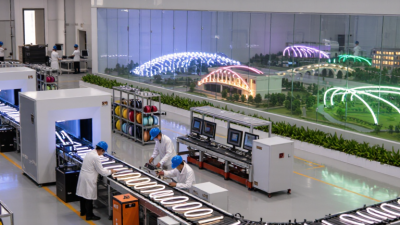
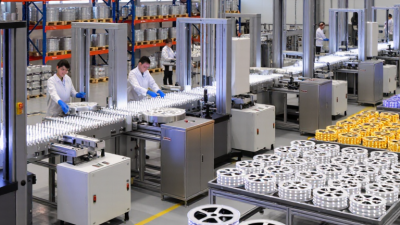
China Top LED Wall Strip Lights Manufacturers are reshaping architectural, retail, hospitality, and residential lighting. Their factories combine dense LED supply chains, automated soldering, aluminum extrusion, and increasingly precise quality inspection. However, “top” should not mean the cheapest quotation. It should mean verified performance.
Grand View Research valued the global LED lighting market at approximately USD 78.95 billion in 2023. Its report projects continued growth through 2030, although market estimates differ by research method. TrendForce also identifies China as a major center for LED packaging and manufacturing capacity. These figures support the opportunity, but they do not prove every supplier’s reliability.
Look closely.
A credible Led Wall Strip Lights manufacturer should provide measured lumen output, color consistency, power efficiency, thermal testing, and documented lifetime claims. LM-80 and TM-21 data can strengthen durability assessments, while IEC 62471 helps evaluate photobiological safety. Factory audits, sample testing, and batch records matter more than polished product photos.
Dr. Nadarajah Narendran, a leading lighting researcher at the Lighting Research Center, has explained, “LEDs are not just light sources; they are electronic devices.” That distinction is important. A flexible strip with bright LEDs can still fail through poor solder joints, weak adhesive, unstable drivers, or excessive heat. Some supplier pages remain vague. That is a warning, not a small detail.
This guide examines China’s leading manufacturers through product quality, customization capability, certifications, production experience, and after-sales reliability. The comparison cannot remove every uncertainty. It can make purchasing decisions more evidence-based.
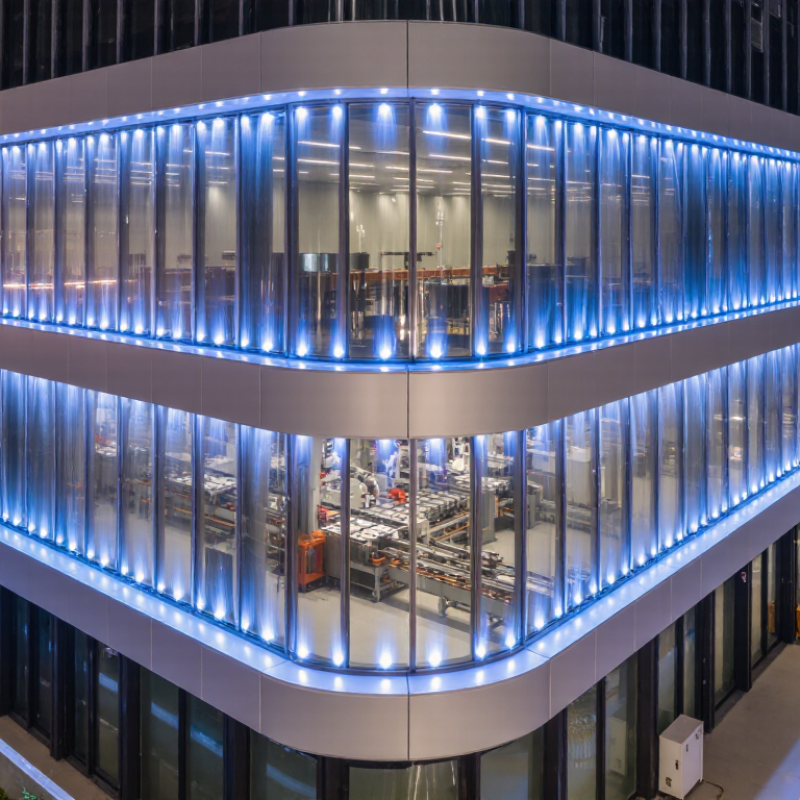
What Are LED Wall Strip Lights and How Do They Work?
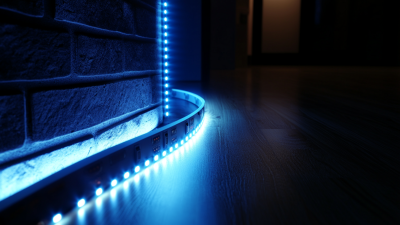
LED wall strip lights are linear fixtures that create an even band of light along walls, ceilings, cabinets, or display areas. They usually contain small LEDs fixed to a flexible or rigid circuit board. A driver changes household AC power into the low-voltage DC power the LEDs need. The strip then produces light through a diffuser, lens, or exposed LED surface.
Their performance depends on more than brightness. LED density affects smoothness, while color temperature changes the room’s atmosphere. A 2700K strip feels warm and relaxing; 4000K appears cleaner and more neutral. High CRI options show wall colors more accurately. During installation checks, I also inspect heat dissipation, connector quality, and voltage drop near long runs. A bright strip is not automatically a reliable one. This detail is sometimes overlooked.
Tips: Match the strip’s IP rating to its location. Indoor dry walls may need basic protection, while damp areas require stronger sealing. Use an aluminum channel to reduce heat and create a cleaner glow. Measure the run before choosing a driver, and leave a safety margin above the calculated wattage. Adhesive backing can fail on dusty or rough walls, so surface preparation matters. RGB strips add color effects, but they may not provide comfortable white light. Testing a short section first is wise, even when the product specifications look convincing.
China Top LED Wall Strip Lights Manufacturers - What Are LED Wall Strip Lights and How Do They Work?
| Data Dimension | Typical Specification or Range | How It Works or Why It Matters | Practical Selection Notes |
|---|---|---|---|
| Product Definition | Flexible or rigid linear lighting containing multiple surface-mounted LEDs on a circuit board. | Electrical current flows through the circuit board and powers the LEDs, which convert electrical energy into visible light. | Choose flexible strips for curved surfaces and rigid bars or profiles for straight, uniform installations. |
| LED Arrangement | Common densities include approximately 30, 60, 120, or more LEDs per meter. | A higher LED density generally reduces visible dark spots and creates more continuous illumination. | Use higher-density strips for wall grazing, signage, cabinetry, and applications where dot-free light is important. |
| Operating Voltage | Most low-voltage products operate at 5 V, 12 V, or 24 V DC. | A compatible LED driver converts mains electricity into the low-voltage DC power required by the strip. | 24 V systems typically allow longer continuous runs with less voltage drop than comparable 12 V systems. |
| Power Consumption | Common decorative and architectural strips use approximately 4.8–19.2 W per meter; high-output models may use more. | Power consumption depends on LED count, LED efficiency, brightness, color type, and operating current. | Select a power supply with at least 20% capacity above the calculated total load. |
| Color Temperature | Typical white-light options range from about 2,200 K to 6,500 K. | Lower Kelvin values appear warmer and more yellow; higher values appear cooler and more blue-white. | Warm white is commonly used for hospitality and residential areas, while neutral or cool white suits commercial and task lighting. |
| Color Rendering Index | General-purpose strips often provide CRI 80 or higher; premium products may reach CRI 90 or higher. | CRI indicates how accurately the light reveals colors compared with a reference light source. | Use high-CRI products for retail displays, galleries, restaurants, kitchens, and residential interiors where color accuracy matters. |
| Dimming and Control | Common control methods include PWM dimming, wall-mounted dimmers, remote controls, sensors, and digital controllers. | A controller adjusts the electrical output or rapidly switches the LEDs to regulate perceived brightness and color effects. | The strip, driver, and controller must use compatible voltage, current, and control protocols. |
| RGB and Tunable White Options | RGB strips mix red, green, and blue LEDs; tunable-white strips combine warm-white and cool-white LED channels. | Independent LED channels are adjusted to create colors or vary the white-light appearance. | RGB is suited to decorative effects; tunable white is better for adjustable ambiance and functional illumination. |
| Beam Distribution | Bare strips emit broad light; aluminum profiles with diffusers provide softer and more controlled distribution. | A diffuser spreads and blends the light from individual LEDs, reducing glare and visible LED points. | For wall washing, position the strip away from the wall or use an angled profile to improve light uniformity. |
| Cutting and Connection | Cut points are commonly spaced every 25–100 mm, depending on the circuit design and operating voltage. | Cut marks identify electrically complete sections that can be separated without damaging the remaining circuit. | Cut only at marked points and use correctly rated connectors or soldered joints for reliable connections. |
| Ingress Protection | Indoor strips may be IP20; protected or outdoor versions commonly range from IP54 to IP67 or higher. | The IP rating describes protection against solid particles and water under defined test conditions. | Use sealed products and suitable connectors in damp locations; verify whether the complete assembly, including end caps, is rated. |
| Thermal Management | Aluminum channels are commonly used for medium- and high-power strips. | Aluminum conducts heat away from the circuit board, helping maintain LED performance and service life. | Avoid installing high-power strips directly on insulating materials without adequate heat dissipation. |
| Expected Service Life | Many quality LED products are rated around 25,000–50,000 operating hours under specified conditions. | Service life is influenced by operating temperature, drive current, power quality, installation, and thermal management. | A rated lifetime is not a guarantee of total failure-free operation; check the stated maintenance or lumen-retention criterion. |
| Installation Methods | Common methods include adhesive backing, mounting clips, recessed channels, surface-mounted profiles, and suspension systems. | The mounting method positions the LEDs, supports heat dissipation, and determines the final visual effect. | Clean and dry the mounting surface before using adhesive backing; use mechanical fixing for long-term or high-temperature installations. |
| Typical Applications | Wall washing, cove lighting, architectural accents, signage, display shelving, ceilings, furniture, and indirect illumination. | The linear format creates continuous decorative or functional light along edges, surfaces, and architectural details. | Specify brightness, color quality, weather protection, control method, and profile type according to the installation environment. |
Note: Specifications are typical industry ranges. Actual performance depends on the product design, installation conditions, driver quality, and operating environment.
Related Posts
-
Top Exterior LED Strip Lights for Outdoor Lighting?
-
Advantages of Utilizing Cool White LED Strip Lights for Your Business
-
The Future of Best Trimmable Led Strip Lights Shaping Smart Lighting Solutions Worldwide
-
What Are China Top Exterior LED Strip Light Manufacturers?
-
China Top 10 LED Strip Lamp Manufacturers in 2026
-
Choosing the Right Manufacturer for Best Wide Led Strip Lights to Elevate Your Projects