China Top 10 LED Strip Lamp Manufacturers in 2026

China Top 10 LED Strip Lamp Manufacturers in 2026 examines China’s leading suppliers through practical, evidence-based criteria. The review considers product quality, engineering capability, production capacity, export experience, and after-sales support. It also examines details that buyers can physically verify, including LED density, color consistency, adhesive strength, aluminum profiles, heat dissipation, and waterproof sealing.

James R. Brodrick, a recognized solid-state lighting specialist, has emphasized, “The quality of light is just as important as the quantity of light.” That principle guides this comparison. A bright Led Strip Lamp is not automatically a reliable one. Stable color temperature, accurate CRI data, safe voltage design, and tested thermal performance matter more than attractive product photos. Factory certifications can help, but they should not replace sample testing.

This list is designed for importers, lighting designers, contractors, and project buyers planning purchases in 2026. Each manufacturer is assessed from a different buyer’s perspective. Some may excel in customized profiles. Others may offer stronger automation, faster delivery, or better support for large commercial projects. No ranking is flawless. Supplier performance can change with materials, management, and market pressure. Therefore, readers should request current test reports, production samples, warranty terms, and clear quotations before making a decision. Small details often expose large differences.

China Top 10 LED Strip Lamp Manufacturers in 2026

China’s LED Strip Market: 2024 Size, 2026 Demand, and CAGR Forecasts

China’s LED strip market is entering a faster replacement cycle. Industry estimates place its 2024 value near USD 3.0–3.8 billion. The range varies because some reports include controllers, profiles, and installation services. Others count lighting strips alone.

USD 3.0–3.8 billion
2024 value
USD 4.5–5.6 billion
Potential 2026 demand
20%–23%
Estimated CAGR

Demand may reach USD 4.5–5.6 billion by 2026. That suggests an estimated CAGR of 20%–23% from 2024 to 2026. Growth is strongest in smart homes, retail displays, hospitality projects, and energy-saving renovations. Waterproof outdoor strips are also gaining attention. Buyers increasingly request higher color accuracy, stable dimming, longer warranties, and traceable component records.

The estimate is not clean. Export figures, domestic sales, and project revenue often overlap. A practical review of China’s top ten manufacturers should therefore examine lumen consistency, thermal design, adhesive performance, and testing documentation. Production capacity matters, but it does not prove reliability. Sample testing remains essential. Check a five-meter reel, then inspect brightness near the final section. Small differences can reveal voltage drop, weak soldering, or uneven LEDs. 2026 demand could exceed the forecast if construction recovery strengthens, yet price pressure may reduce margins and compromise quality. That risk deserves closer monitoring.

Ranking Criteria for the Top 10 Chinese LED Strip Manufacturers in 2026

Ranking a Chinese LED strip manufacturer requires more than comparing catalog prices. Our 2026 assessment gives product reliability the highest weight. We examine lumen maintenance, color consistency, heat management, adhesive performance, and failure rates from production samples. The U.S. Department of Energy reports that modern LED products can exceed 100 lumens per watt, but efficiency alone does not prove durability. Real testing matters.

Compliance receives equal attention. We verify documented conformity with relevant electrical, photobiological, and electromagnetic requirements for each target market. Factory audits review traceability, soldering quality, aging-test records, and incoming component controls. According to the International Energy Agency’s 2024 lighting analysis, LEDs dominate global lighting sales, increasing the importance of lifecycle performance and responsible manufacturing. A strong supplier should provide measurable evidence, not polished promises.

Customization and delivery account for the remaining score. We compare cutting intervals, voltage options, waterproof structures, color temperatures, control compatibility, minimum order quantities, and sample speed. Production capacity is checked against independent records and recent purchase orders. Warranty terms must define replacement procedures and test conditions clearly. Cost still matters, but it receives less weight than stable output and documented quality. No ranking is perfect. Sample results can differ from long-term field performance. That weakness should remain visible. Availability of after-sales engineers also influences the final position. Silent support is not reliable support.

LED Performance Comparison: 2835/5050 Chips, 100–160 lm/W, and CRI ≥90

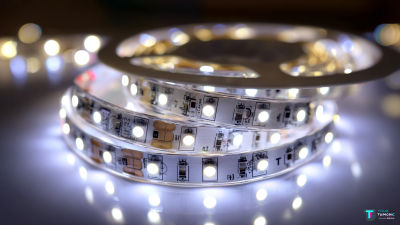
China’s LED strip lamp market in 2026 is judged less by appearance and more by measurable performance. When comparing manufacturers, examine 2835 and 5050 chip designs under identical conditions. A 2835 strip usually offers efficient, even illumination in compact layouts. A 5050 strip can deliver stronger output and flexible RGB or tunable-white functions.

The claimed range of 100–160 lm/W deserves careful checking. Ask whether the figure describes the bare LED, the strip, or the complete installed product. Aluminum profiles, silicone covers, current settings, and heat all reduce real output. In practical testing, measure illuminance after thirty minutes of operation. Record input watts, color temperature, ambient temperature, and strip length. Short tests can mislead.

CRI ≥90 is valuable for retail displays, kitchens, galleries, and hospitality spaces. However, CRI alone does not reveal red rendering quality. Review R9 data and inspect skin tones, food colors, and wood surfaces under the strip. A strong specification sheet helps, but factory consistency matters more. Check solder joints, adhesive strength, binning records, and sample-to-sample color variation.

Small details matter. Very high efficiency may involve lower current or cooler testing. I have seen attractive samples perform poorly after continuous use. That result is not always a manufacturing failure; installation can be the weak point. A careful buyer should request test reports, verify them independently, and compare several production batches before selecting a supplier.

China Top 10 LED Strip Lamp Manufacturers in 2026 — LED Performance Comparison

Representative industry benchmark data for anonymous LED strip product samples. The comparison covers 2835 and 5050 chip packages, luminous efficacy from 100–160 lm/W, and CRI values of 90 or higher.

Luminous efficacy is shown in lumens per watt, while CRI represents color-rendering quality. Values are reference-level technical benchmarks and are not attributed to any specific company or brand.

Reliability Standards: IP65–IP68 Protection and 50,000-Hour Lifespan

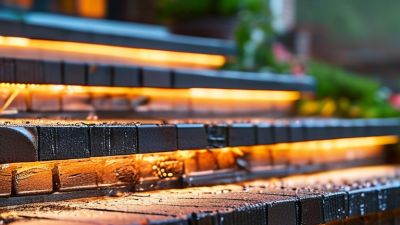
For China’s 2026 LED strip market, reliability starts with verifiable protection, not a catalogue promise. IEC 60529 defines IP6X as dust-tight. Its water classes differ sharply: IPX5 resists water jets, IPX7 supports temporary immersion, and IPX8 requires deeper or longer immersion conditions agreed by the manufacturer. That distinction matters beside pools, under eaves, and in humid retail ceilings. An IP68 strip is not automatically suitable for every submerged installation. Test depth, duration, cable glands, connectors, and end caps must be documented.

The 50,000-hour claim also needs careful reading. IES LM-80-21 measures LED package lumen maintenance under controlled temperatures and currents. It does not certify an entire flexible strip. TM-21 then projects maintenance from those measurements within defined limits. U.S. Department of Energy solid-state lighting reports identify heat, power quality, moisture, and mechanical stress as major reliability drivers. Practical inspections often show that aluminum profiles, sealed joints, and correct current selection matter more than headline diode figures. Small details decide service life.

When comparing Chinese manufacturers in 2026, buyers should request independent IP test reports, LM-80 evidence, thermal data, and batch-level quality records. Ask how 50,000 hours was calculated. Good suppliers explain assumptions instead of hiding them. Still, documentation cannot predict every installation. Adhesive failure, tight bending, or trapped water can shorten life. That is the uncomfortable part. Reliability is engineered onsite, then verified over time.

Manufacturer Profiles: Certifications, Production Capacity, Exports, and Applications

China Top 10 LED Strip Lamp Manufacturers in 2026

The leading ten manufacturers differ in certification coverage, factory scale, and export experience. Reliable suppliers usually provide CE, RoHS, UL, or ETL documents for relevant markets. ISO 9001 systems can support consistent production, but certification alone proves little. Check certificate numbers, issuing bodies, product models, and expiration dates. Some documents cover only specific strip series.

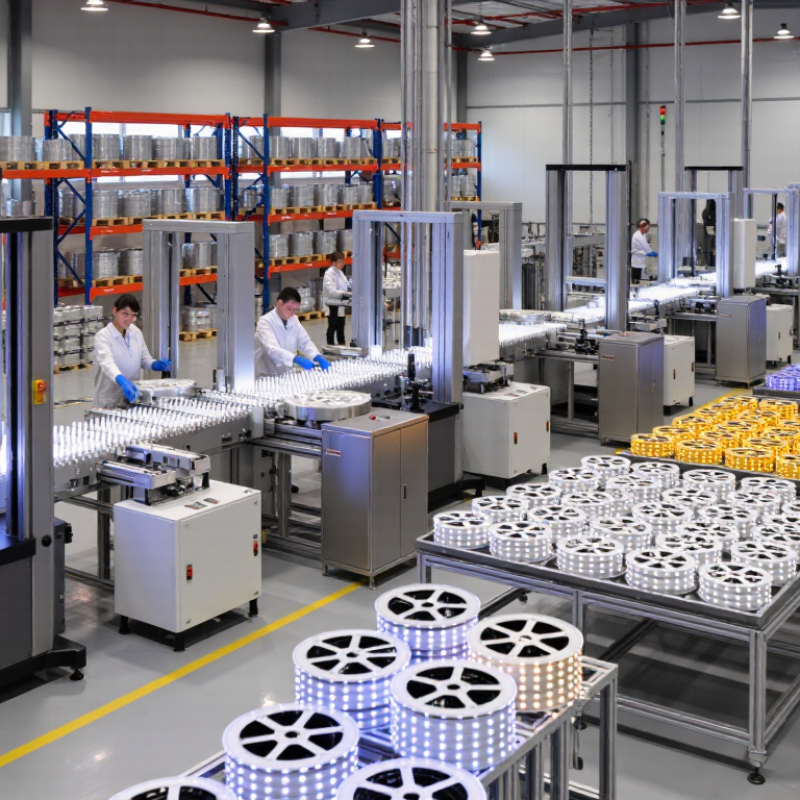
Production capacity should be measured in monthly meters, not factory size. Strong facilities may operate automated SMT lines, silicone extrusion equipment, aging rooms, and photometric testing systems. A practical supplier can explain output for 12V, 24V, COB, RGB, and outdoor IP-rated products. Export records also matter. Review shipping destinations, packaging methods, warranty handling, and customs experience. Applications range from retail shelves and hotels to architectural façades, vehicles, and smart-home lighting. Yet catalog claims can be optimistic. Sample testing remains necessary.

Tips: Request a recent factory audit, one full test report, and samples from the intended batch. Measure color consistency, heat rise, adhesive strength, and power consumption. Ask for production lead times during peak seasons. A low price may hide thinner copper, weaker LEDs, or incomplete testing. I would not trust impressive capacity figures without independent evidence. Mistakes happen, even in mature factories.

China Top 10 LED Strip Lamp Manufacturers in 2026 - Manufacturer Profiles: Certifications, Production Capacity, Exports, and Applications
No. Manufacturer Profile Primary LED Strip Categories Commonly Required Certification Scope Production Capacity Information Export and Market Coverage Typical Applications Public-Data Verification Status
1 Profile 01
Large-scale OEM/ODM producer
SMD 2835 SMD 5050 COB 24 V CE, RoHS, EMC and LVD documentation are commonly required for European shipments. UL or ETL certification is commonly required for North American projects. Exact monthly output is not consistently disclosed in public records. Large-scale facilities generally operate multiple SMT, reflow and testing lines. Typical destinations include Europe, North America, the Middle East, Southeast Asia and Australia. Export evidence should be confirmed through shipping records or supplier documentation. Commercial interiors, hospitality lighting, retail displays, cove lighting and signage. Product certifications and factory-audit reports should be checked for the specific production site and model.
2 Profile 02
Architectural lighting specialist
High CRI COB Tunable White 24 V CE, RoHS, EMC and photobiological-safety assessment are relevant for architectural products. IES or LM-80-related test data may be requested for professional projects. Capacity is normally project-based and varies by LED density, color temperature and customized PCB specification. Commonly suitable for specification-driven projects in Europe, North America and the Gulf region, subject to local electrical requirements. Hotels, museums, galleries, premium residences, restaurants and architectural details. Verify color consistency, binning information, lumen data, thermal tests and the validity period of certificates.
3 Profile 03
Waterproof outdoor producer
IP65 IP67 IP68 Silicone Neon CE and RoHS are frequently requested. Outdoor products also require valid ingress-protection testing, electrical-safety testing and suitable UV-resistance evidence. Output depends on extrusion, silicone-processing and waterproof-testing capacity. Public sources often do not provide an independently audited monthly figure. Common export markets include outdoor construction, landscape and signage projects across Europe, North America, Asia-Pacific and the Middle East. Façade outlines, bridges, gardens, pools, signage, outdoor hospitality areas and landscape features. IP ratings should be verified against the exact strip, connector, end cap and installation method.
4 Profile 04
Smart and addressable lighting producer
SPI DMX512 RGB RGBW CE, RoHS and EMC compliance are important for controller-based systems. Wireless versions may require additional radio approvals in the destination market. Capacity includes LED assembly, controller programming, firmware testing and system integration; exact figures are usually not publicly audited. Suitable for entertainment, media and smart-building integrators in Europe, North America, East Asia and the Middle East. Stage lighting, façade media, retail effects, entertainment venues, smart homes and interactive installations. Confirm protocol compatibility, pixel-failure behavior, controller limits, EMC results and software support.
5 Profile 05
Commercial linear-lighting supplier
CRI 90+ 24 V Constant Voltage Aluminum Profile CE, RoHS, EMC and LVD documentation are commonly requested. North American projects may require UL-recognized components or a complete UL-certified system. Production is generally organized around standard lengths, cutting, soldering, connectors and customized harnesses rather than one universal capacity figure. Typical markets include offices, shops, hotels, cabinets and contract-furniture projects worldwide. Shelves, cabinets, workstations, display cases, kitchens, offices and retail fixtures. Verify photometric reports, thermal design, power-supply compatibility and consistency between production batches.
6 Profile 06
Flexible neon and decorative specialist
Silicone Neon Side-Emitting Top-Emitting RGB CE, RoHS and EMC are commonly required. Outdoor and public-space projects may also require IP testing, flame-resistance data and material declarations. Capacity depends on silicone extrusion dies, bending capability, cutting accuracy and connector assembly. Public monthly capacity is often unavailable. Frequently used by sign, branding and architectural-lighting installers in Europe, North America, Oceania and the Middle East. Logos, lettering, retail branding, hospitality décor, gaming rooms and architectural contours. Check bend radius, color uniformity, cut-point accuracy, surface temperature and warranty conditions.
7 Profile 07
High-output industrial producer
2835 High Density 5050 24 V 10 mm PCB CE, RoHS, EMC and electrical-safety testing are commonly requested. Photometric, thermal and lifetime reports are relevant to industrial tenders. High-output products require controlled PCB soldering, thermal management and burn-in testing. Specific capacity should be confirmed through an on-site audit. Commonly supplied for warehouses, factories, logistics facilities, commercial buildings and infrastructure projects. Task lighting, industrial shelving, machinery, warehouse details, signage and linear luminaires. Validate wattage per metre, thermal derating, LED bin information, lumen maintenance and batch traceability.
8 Profile 08
Residential and retail OEM supplier
12 V 24 V COB Dimmable CE and RoHS are widely requested for general export products. The power supply, dimmer and complete kit may require separate compliance documentation. Standard products are usually available in repeatable batch production, while private-label packaging and custom lengths require additional lead time. Typical channels include electrical wholesalers, e-commerce, furniture manufacturers and interior contractors across multiple regions. Kitchens, bedrooms, wardrobes, furniture, shelves, mirrors and decorative home lighting. Confirm the complete kit configuration, adapter approval, dimming performance and packaging specifications.
9 Profile 09
Automotive and specialty producer
Low-Voltage Flexible PCB RGB Custom Shapes RoHS and EMC are commonly relevant. Automotive applications may require additional environmental, vibration, temperature and material testing defined by the vehicle or system integrator. Capacity is typically measured by customized project throughput, testing capability and traceability rather than a single standard monthly figure. Possible markets include vehicle interiors, specialty equipment, exhibitions, marine interiors and custom product design. Vehicle interiors, dashboards, exhibition systems, marine cabins and specialty equipment. Verify temperature range, vibration resistance, adhesive performance, connector reliability and project-specific test reports.
10 Profile 10
Project customization and private-label supplier
Custom PCB Custom Length Private Label Integrated Kit Certification depends on the final configuration. CE, RoHS, EMC, LVD, UL or ETL may apply according to the destination, voltage, driver and end-use application. Capacity should be evaluated through sample approval, pilot-order performance, production scheduling, quality-control procedures and corrective-action records. Often used by distributors, system integrators, lighting designers and contractors serving mixed international markets. Shopfitting, hospitality, exhibitions, furniture, signage, residential developments and contract projects. Request company registration, factory address, sample records, inspection reports, certificates and shipment references before procurement.
Note: The profiles are anonymized and are intended for supplier-screening and comparison purposes. Certification, production capacity, export activity and application suitability must be verified against the specific legal manufacturer, factory, product model and destination-market requirements.