What Are the Best Wall Lights Made in China?
Choosing the best Wall Lights made in China takes more than comparing prices or polished product photos. The right choice depends on where the fixture will be installed, how it performs, and whether its finish suits the space. China has a broad lighting supply chain, but quality can vary between factories and product lines. That difference matters.
A careful evaluation starts with tangible details: the weight and finish of the housing, the stability of the mounting plate, and the quality of the light source or driver. Ask suppliers for clear specifications, sample units, and relevant test documentation. Check dimensions, voltage options, color temperature, warranty terms, and packaging before placing a large order. For outdoor use, confirm the product is designed for exposure to weather. Details matter.
This guide explores how to compare manufacturers, materials, designs, and quality-control practices when sourcing wall lights from China. It also considers common trade-offs between customization, lead time, minimum order quantities, and cost. A lower quote may look attractive, yet unclear specifications can create delays or disappointing results. Even a well-made fixture may not suit every room. The best choice is the one that matches your project and can be verified—not simply the one with the most impressive listing. That sounds obvious, but it is easy to overlook.
What Defines a High-Quality Wall Light Made in China?
A high-quality wall light made in China begins with materials that suit its intended room and use. Check that the metal body feels rigid, the wall plate sits flat, and the finish has no thin patches or sharp edges. These details are easy to miss in product photos. Ask for a sample before approving a large order.
Light quality matters just as much as appearance. A well-designed diffuser should soften the LEDs without obvious bright dots or dark bands. The driver should operate quietly and steadily, with no visible flicker during normal use. For a bathroom or covered outdoor area, confirm that the stated protection rating matches the installation conditions. A warm white light can make a hallway feel inviting, while a cooler tone may suit a work area. Test it in the actual space when possible.
Build quality also depends on careful assembly and clear records. Inspect the wiring, terminals, screw alignment, and strain relief; small flaws can create installation problems. Request test reports for electrical safety and light performance, and check that they apply to the exact model and configuration. It matters. A factory’s capability is useful, but consistent quality control across production batches is more important. Not perfect. Even a detailed checklist cannot replace examining a physical sample and asking how defects are handled.
Common Types of Wall Lights Manufactured in China
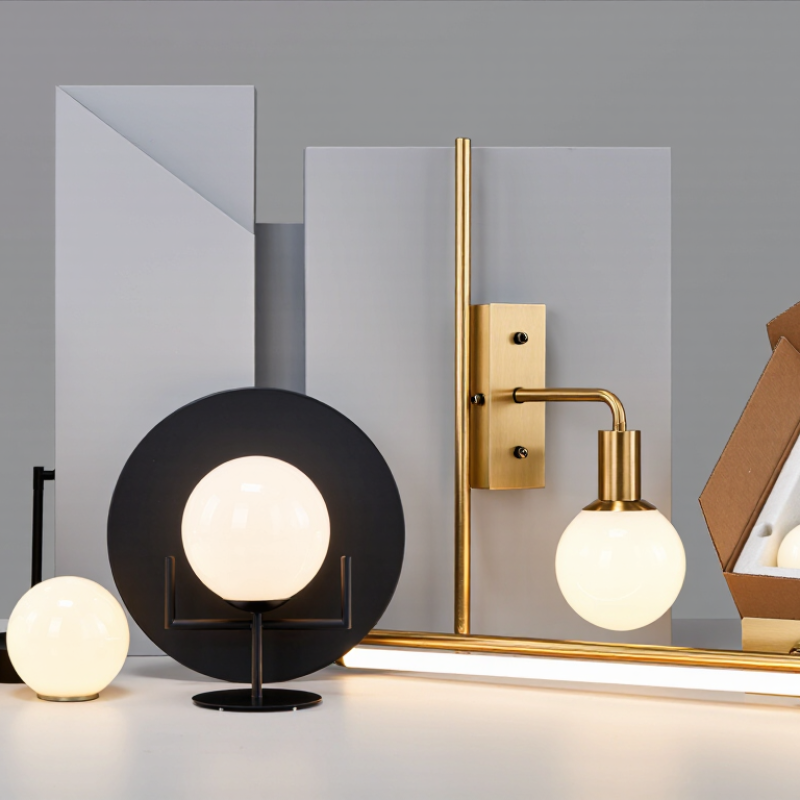
Chinese manufacturers produce several distinct wall-light types, each suited to a different room or installation. Common indoor options include shaded sconces, adjustable bedside reading lights, picture lights, and up-and-down fixtures. Some use a narrow beam to highlight textured plaster; others spread soft light across a hallway.
Outdoor ranges often include sealed bulkhead lights and motion-sensor fixtures. For damp locations, check the product’s stated ingress-protection rating rather than relying on appearance. Metal housings, glass diffusers, and molded polymers are common, but finish quality and heat management can vary between suppliers. Small details matter. Ask for test reports and sample units before approving a large order.
Grand View Research valued the global LED lighting market at USD 75.3 billion in 2023 and projected an 11.0% compound annual growth rate for 2024–2030. This broader market figure is not specific to wall lights, but it reflects the shift toward LED-based products.
Tips: Match the beam direction to the task, confirm dimmer compatibility, and inspect wiring access. Decorative shades can make bulb replacement awkward—a practical drawback worth checking early.
Materials, Components, and Production Standards
For wall lights made in China, material selection should be judged by heat, corrosion, and finish consistency—not appearance alone.
Die-cast aluminum helps dissipate heat from LED boards, while steel can provide a sturdy, economical housing. In damp rooms, inspect coating coverage around screw holes and joints; exposed metal can corrode there first. Small details matter.
The U.S. Department of Energy’s 2020 U.S. Lighting Market Characterization reported that LEDs represented about 48% of installed lighting stock. That scale makes component quality especially relevant: drivers, thermal interfaces, and LED boards affect reliability as much as the visible shade. DOE guidance says LED lighting can use at least 75% less energy than incandescent lighting, but that comparison does not guarantee a fixture’s real-world performance. Check the complete luminaire’s tested power, light output, and color consistency.
For production checks, IEC 60598-1 sets general safety and test requirements for luminaires; IEC 60598-2-1 covers fixed general-purpose luminaires. Ask suppliers for test reports tied to the exact model, plus inspection records for wiring, insulation, grounding, and burn-in testing. A polished sample proves little. Batch variation happens, and even good factories miss things. That deserves a second check. A practical review compares sample measurements with finished-batch records, rather than relying on a certificate alone.
How to Compare Chinese Wall Light Manufacturers and Products
Comparing Chinese wall light manufacturers starts with more than price and catalog photos. A polished image cannot show wiring quality, finish consistency, or how a fixture handles heat. Ask for dimensioned drawings, material details, light-source specifications, and clear photos of the actual product. Check whether the manufacturer can explain its testing process and provide relevant reports for your target market. Small details matter. Inspect a sample under ordinary room lighting; brushed metal can look warmer or rougher in person. Don’t rely on one sample alone. Ask how production batches are checked, and what happens when a component changes. That said, a detailed specification still cannot guarantee perfect consistency.
Compare products for the room where they will be installed. For a narrow hallway, note how far the fixture projects from the wall and whether its light creates glare at eye level. For bedside use, check the switch location and whether the lamp can be serviced without removing the whole fitting. Ask for color-temperature and light-output data, not just words such as “warm” or “bright.” Review packaging details too, especially if glass or ceramic parts travel long distances. Look closely. A supplier’s response to a small technical question can reveal more than a sales presentation, though it is not a complete measure of reliability. Before placing a larger order, compare samples, written specifications, and production inspection records side by side.
What Are the Best Wall Lights Made in China?
Compare ingress-protection ratings to help match a wall light to its intended location.
IP codes follow IEC 60529: the first digit describes protection against solid objects, and the second describes protection against water. These ratings are classifications, not a linear measure of overall product quality. Check the rating required for the installation location, along with the product’s installation instructions.
Choosing Wall Lights for Different Spaces and Uses
Choosing wall lights starts with the activity, not the fixture’s appearance. In a narrow hallway, use shielded, evenly spaced fittings to reduce harsh shadows on doors and framed art. A compact uplight can make a low ceiling feel taller, but exposed bulbs may cause glare at eye level. Keep it soft.
By a bed, aim adjustable reading lights toward the page, not your partner’s pillow. Place switches within reach, and check that the arm clears shelves and headboards. Check the scale. In bathrooms, pair mirror-side lights at face height with a suitable damp-location rating; overhead light alone can deepen shadows under the eyes. Exact placement depends on mirror width and user height.
For living rooms, wall washers can highlight textured plaster or a bookcase, while dimming helps shift from reading to relaxed evenings. Choose a warm, consistent color appearance beside wood and fabric. LED efficiency matters too: the U.S. Department of Energy’s Energy Saver guidance says LEDs use at least 75% less energy and last up to 25 times longer than incandescent lighting. Yet efficient does not always mean comfortable. Review beam angle, glare control, replaceable drivers, and installation access before ordering, including for fixtures made in China.