
Top LED Filament Bulbs for Wholesale Buyers
Choosing the right LED Filament Bulbs can shape product appeal, margins, and customer satisfaction. Wholesale buyers need more than attractive amber glass and vintage styling. They need consistent light output, dependable construction, and clear supplier documentation. A bulb may look premium in a catalog but perform differently in a real pendant. Testing matters.
This guide examines practical factors for wholesale purchasing, including wattage, lumen output, color temperature, color rendering, base type, dimming performance, and expected service life. It also considers packaging strength, batch consistency, and supplier responsiveness. Warm 2700K light may suit restaurants and bedrooms. Neutral 4000K light can work better in retail displays and offices. Small details affect repeat orders.
No shortlist is perfect. A lower price may hide weaker drivers or uneven filament placement. That assumption can fail. Buyers should request samples, inspect glass clarity, and compare several units under the same dimmer. Product claims should match test reports and recognized market requirements. Reliable suppliers explain limitations instead of promising impossible performance. They also provide stable specifications across future batches.
The featured options focus on practical wholesale value, not novelty alone. Each selection should help buyers balance appearance, efficiency, durability, and installation compatibility. Careful sourcing reduces returns and protects brand reputation. Still, every market has different expectations. Verify local requirements before placing a large order. Good decisions begin with evidence, but experience remains essential.
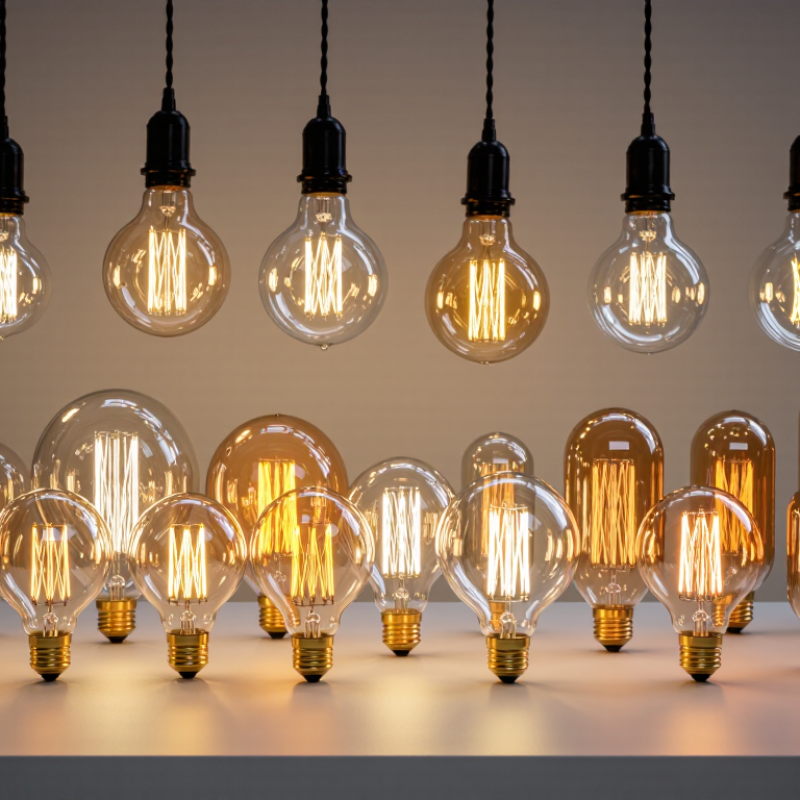
LED Filament Bulb Technology and Key Design Features
Top LED Filament Bulbs for Wholesale Buyers
LED filament bulb technology combines visible “filaments” with solid-state lighting efficiency. The U.S. Department of Energy reports that many modern LED packages exceed 100 lumens per watt, although complete decorative lamps often achieve less after optical and thermal losses. Wholesale buyers should compare delivered lumens, not chip ratings. A clear glass bulb may look elegant, but its exposed emitters can create glare at eye level. Frosted glass softens the light and hides minor brightness differences.
Good designs use vertical or spiral filaments, stable phosphor coatings, and insulated drivers inside compact bases. Check color temperature carefully. Around 2,200–2,700K creates a warm restaurant-like glow, while 3,000K appears cleaner in retail spaces. The U.S. Environmental Protection Agency’s ENERGY STAR lighting criteria commonly emphasize minimum color rendering and lumen maintenance, making CRI and long-term output practical purchasing checks. High-CRI models can reveal wood grain and fabric colors more naturally.
The International Energy Agency’s 2024 lighting analysis indicates that LEDs represent roughly half of global lighting sales, but efficiency varies widely between products. Request LM-80 or equivalent LED performance evidence, driver test conditions, and rated life assumptions. Some suppliers quote 25,000 hours without explaining temperature or switching cycles. That is not enough. In my testing experience, a beautiful filament lamp can fail its promise when the driver overheats in a tight pendant. Review dimming compatibility, flicker data, base tolerances, packaging strength, and sample consistency before approving a large wholesale order.
Types of LED Filament Bulbs for Wholesale Purchasing
Top LED Filament Bulbs for Wholesale Buyers
Types of LED Filament Bulbs for Wholesale Purchasing
Wholesale buyers usually compare LED filament bulbs by shape, filament design, and lighting performance. Clear glass bulbs expose straight or spiral filaments and create a bright, traditional appearance. Amber glass produces warmer light with less glare. Frosted glass offers softer illumination for restaurants, hotels, and residential fixtures. The bulb shape matters too. Candle, globe, tube, and standard A-shaped models suit different sockets and applications.
Filament arrangements affect both appearance and brightness. Straight filaments often provide balanced illumination, while squirrel-cage and spiral styles create stronger decorative effects. Flexible filament designs can produce unusual patterns, but their visual appeal may reduce usable light. Check lumens instead of relying only on wattage equivalents. Color temperatures around 2200K to 3000K suit warm interiors, while 4000K appears cleaner in retail or office spaces. High color rendering helps fabrics, food, and wood look more natural.
Base compatibility requires careful checking. Common options include E26, E27, and bayonet bases, but regional socket standards differ. Review voltage, dimming performance, beam angle, rated life, and test documentation before placing a large order. Samples should run in actual fixtures for several hours. Small issues appear there. Some bulbs flicker with older dimmers, and glass color can vary slightly between production batches. I have found that packaging strength also deserves testing, especially when cartons face repeated warehouse handling.
Technical Specifications That Define Wholesale Quality
Top LED Filament Bulbs for Wholesale Buyers
Technical specifications reveal wholesale quality more clearly than appearance. Start with efficacy, measured in lumens per watt. The U.S. Department of Energy reports that advanced LED research has exceeded 200 lm/W in laboratory settings, while commercial filament bulbs usually perform lower. A practical wholesale target is 100 lm/W or more, depending on the decorative glass design. Check rated lumens, wattage, and test conditions together. Otherwise, comparisons become misleading.
Color consistency matters in large orders. A 2700K bulb should look warm across every carton, not orange in one batch and pale in another. Color Rendering Index should reach at least 80 for general use. Retail, hospitality, and display projects may require CRI 90 or higher. The International Energy Agency states that LEDs can use around 75% less energy than incandescent lamps and last substantially longer. However, a long rated life means little without lumen-maintenance data. Request L70 testing, thermal measurements, and documented operating hours. Small details matter.
Look closely at electrical behavior. Power factor, input-current stability, flicker percentage, and dimmer compatibility affect installation results. A bulb that flickers on a showroom shelf can damage buyer confidence. It happens. Confirm testing under the target voltage, temperature, and dimming range. DOE solid-state lighting reports also emphasize thermal management as a major factor in LED performance. Filament-style lamps have limited internal space, so heat can collect around the LED strips. Ask for sample testing before committing to pallet quantities. Packaging strength, socket fit, and batch traceability deserve equal attention, although buyers sometimes overlook them.
Top LED Filament Bulbs for Wholesale Buyers: Technical Specifications That Define Wholesale Quality
This representative comparison uses common LED filament bulb output classes. Higher lumen values provide more usable light, while low wattage indicates better energy efficiency. Wholesale buyers should also verify color temperature, color rendering index, dimming compatibility, operating temperature, and rated lifetime before purchasing.
How to Evaluate Suppliers, Pricing, and Minimum Order Terms
Top LED Filament Bulbs for Wholesale Buyers
How to Evaluate Suppliers, Pricing, and Minimum Order Terms
Wholesale LED filament bulb buyers should evaluate supplier reliability before comparing unit price. Ask for recent test reports covering lumen output, color temperature, power factor, and lifespan. Request production samples from the same batch. A polished sample proves little. Check glass finish, filament alignment, base quality, and startup behavior at low temperatures. In practice, flicker may appear after repeated switching, not during a quick inspection.
A low quote may exclude packaging, inspection, freight, or replacement stock. Request tiered pricing for 500, 1,000, and 5,000 pieces. Compare landed cost, not catalog price. Confirm whether prices remain valid for 30 or 60 days. Minimum order terms deserve equal attention. Some suppliers accept mixed wattages, while others require one model per carton. Ask about deposits, lead times, defect allowances, and partial shipment rules. Get every promise in writing.
A dependable supplier can explain material choices and provide traceable batch records. Look for factory audits, calibrated testing equipment, and a named quality contact. Verify certifications for your target market independently. Do not rely on copied certificates. Negotiation should protect consistency, not only margin. Carton damage is easy to underestimate, and replacement costs can erase a discount. Build a small pilot order into your plan. It may seem inefficient, but it reveals weak packaging, color variation, and slow communication before a full purchase.
Storage, Compliance, and Distribution Considerations for Buyers
Top LED Filament Bulbs for Wholesale Buyers
Storage, Compliance, and Distribution Considerations for Buyers
Wholesale buyers should inspect storage conditions before approving large LED filament bulb orders. Keep cartons in a dry, shaded warehouse with stable temperatures. Avoid damp floors, leaking roofs, and direct sunlight. Moisture can damage packaging and weaken electrical components. Store cartons upright when the packing design requires it. Use clear aisle labels and batch records for faster stock checks.
Tips: Keep pallets off the floor, limit stacking height, and use first-in, first-out rotation. Photograph damaged cartons before moving them. A small record can prevent a large dispute.
Compliance needs practical verification, not only supplier promises. Request current test reports, safety documentation, energy information, and packaging labels for the intended market. Check voltage, base type, wattage, color temperature, and dimming claims against the purchase order. Requirements may differ between countries and product categories. Confirm documents with qualified testing or conformity professionals when necessary. I have seen avoidable delays caused by one missing label detail. It seemed minor, but the shipment waited.
Distribution planning should protect glass envelopes and filament structures from vibration. Use corner protection, suitable pallet wrap, and visible handling instructions. Sample cartons after long transport routes. Check for loose bases, cracked glass, flickering bulbs, and incorrect specifications. Keep serial, batch, and inspection records linked to each shipment. This improves traceability when customers report a fault. It also reveals weak packaging, which buyers sometimes overlook until returns increase.
Top LED Filament Bulbs for Wholesale Buyers - Storage, Compliance, and Distribution Considerations for Buyers
| Bulb Profile | Typical Power / Lumen Output | Typical CCT / CRI | Common Base and Voltage | Approx. Product Size | Recommended Storage Conditions | Typical Wholesale Packing | Compliance Documentation to Request | Distribution Considerations |
|---|---|---|---|---|---|---|---|---|
| A19 Standard | 6–9 W 600–900 lm | 2,200–3,000 K CRI ≥80; high-CRI versions ≥90 | E26 or E27 120 V or 220–240 V | Approx. 55–60 mm diameter 100–115 mm length | Keep dry and ventilated; recommended planning range 5–35 °C and below 70% RH; protect from condensation and direct sunlight. | 24–50 pieces per master carton; individual protective partitions recommended. | Applicable electrical-safety report; photometric test report; RoHS or equivalent substance declaration; market-specific EMC and energy-efficiency documents. | Fast-moving general-purpose SKU; use drop-resistant inner packaging and verify carton dimensions for parcel or pallet optimization. |
| ST64 Vintage | 4–8 W 350–800 lm | 1,800–2,700 K CRI ≥80; decorative high-CRI options available | E26 or E27 120 V or 220–240 V | Approx. 64 mm diameter 135–145 mm length | Store upright where possible; keep filaments and glass away from impact; maintain dry conditions and avoid rapid temperature changes. | 12–24 pieces per master carton; molded pulp or die-cut inserts help reduce glass-to-glass contact. | Electrical-safety certification or test report; EMC report where required; RoHS declaration; rated-life and lumen-maintenance test data. | Longer glass envelope increases dimensional-weight cost; confirm retail shelf height and use corner protection for mixed pallets. |
| G45 Mini Globe | 3–6 W 250–600 lm | 2,200–3,000 K CRI ≥80 | E12, E14, E26, or E27 Market-dependent voltage | Approx. 45 mm diameter 70–85 mm length | Keep cartons flat, dry, and free from compression; separate from heavy products during warehouse storage. | 24–50 pieces per master carton; use cavity separation for small glass globes. | Base and voltage marking verification; safety report; photometric data; restricted-substance declaration; dimming test data if marketed as dimmable. | Compact and suitable for multipacks; confirm socket compatibility because E12, E14, E26, and E27 are not interchangeable in every market. |
| C35 Candle | 3–6 W 250–600 lm | 2,200–3,000 K CRI ≥80; CRI ≥90 options available | E12, E14, B15, or E27 Market-dependent voltage | Approx. 35 mm diameter 100–115 mm length | Store in original dividers; avoid side pressure on pointed or decorative glass; keep away from water and corrosive materials. | 24–50 pieces per master carton; pointed-tip protectors recommended for candle-shaped profiles. | Electrical-safety report; EMC documentation where applicable; RoHS declaration; clear base, wattage, voltage, and dimming markings. | Commonly sold for chandeliers and decorative fixtures; provide dimensional drawings to prevent fitment returns. |
| T45 Tube | 4–8 W 350–800 lm | 2,200–3,000 K CRI ≥80 | E26 or E27 120 V or 220–240 V | Approx. 45 mm diameter 110–140 mm length | Use full-length carton support; do not stack heavy cartons directly on top of glass-heavy inner packs. | 12–24 pieces per master carton; end protection and internal dividers recommended. | Safety and EMC reports for the destination market; photometric file or test report; RoHS or equivalent declaration. | Longer profile requires stronger edge protection; calculate pallet utilization by carton length rather than piece count alone. |
| G95 Large Globe | 5–9 W 450–900 lm | 1,800–3,000 K CRI ≥80; high-CRI versions ≥90 | E26 or E27 120 V or 220–240 V | Approx. 95 mm diameter 130–145 mm length | Keep in rigid dividers; avoid carton overhang on pallets; protect from vibration during handling and transport. | 6–12 pieces per master carton; stronger inserts and lower stacking height are generally advisable. | Safety report; photometric and color-consistency data; RoHS declaration; dimming and flicker test results when those claims are made. | High cube utilization and higher breakage exposure; use dedicated pallet layers and confirm freight surcharge thresholds. |
| Universal Buyer Control Points | Confirm rated wattage, lumen output, CCT tolerance, CRI, beam angle, power factor, rated life, and lumen maintenance using a current test report. | Check that the product marking, packaging, plug or base format, and rated voltage match the destination market and applicable regulations. | Do not store cartons in flooded areas, outdoors, near heaters, or where condensation can form. Follow the supplier’s declared storage limits when they differ. | Validate carton drop performance, inner-pack quantity, gross weight, carton dimensions, pallet pattern, and container loading plan before placing a large order. | Compliance requirements vary by destination. Request traceable reports from recognized laboratories and verify any required registration, marking, recycling, energy, or customs documents. | Approve a production sample, retain a golden sample, define acceptable quality limits, and inspect glass, base alignment, flicker, color consistency, packaging, and labeling before shipment. | ||
Note: The specifications and packing quantities shown are practical wholesale planning ranges for common LED filament bulb formats. Exact values vary by construction, destination voltage, certification scheme, packaging design, and supplier specification.
