How to Choose the Best Bright Strip Lights for Your Space?
Choosing the right Bright Strip Lights can transform any space. Lighting designer Sarah Mitchell emphasizes, “The right lights can change a room's atmosphere.” Her insight highlights the importance of selecting the perfect lighting for your needs.
Bright Strip Lights come in various colors, lengths, and intensities. This variety can be overwhelming for many. For instance, some prefer warm white tones for a cozy feel, while others opt for vibrant colors to energize their space. Understanding your environment is crucial before making a choice.
Consider where you want to install your Bright Strip Lights. Are they for your living room, kitchen, or perhaps your home office? Each area has unique lighting needs. It is critical to reflect on how you use each space. On some occasions, we might select lights based solely on aesthetics rather than functionality. That choice might require reassessment later. Take your time to explore options and find what works best for your style and requirements.
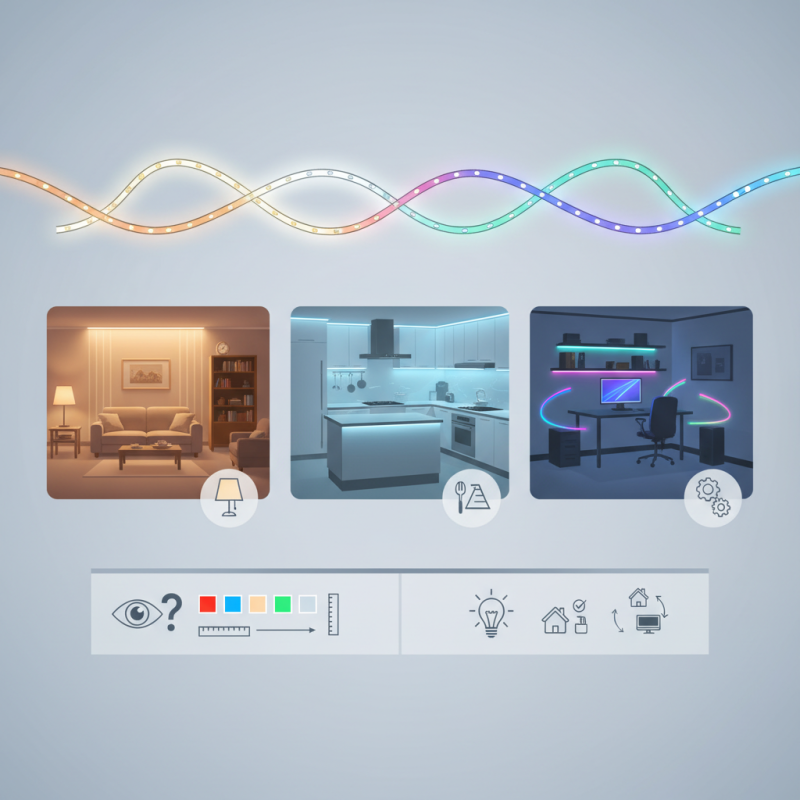
Understanding Different Types of Bright Strip Lights Available
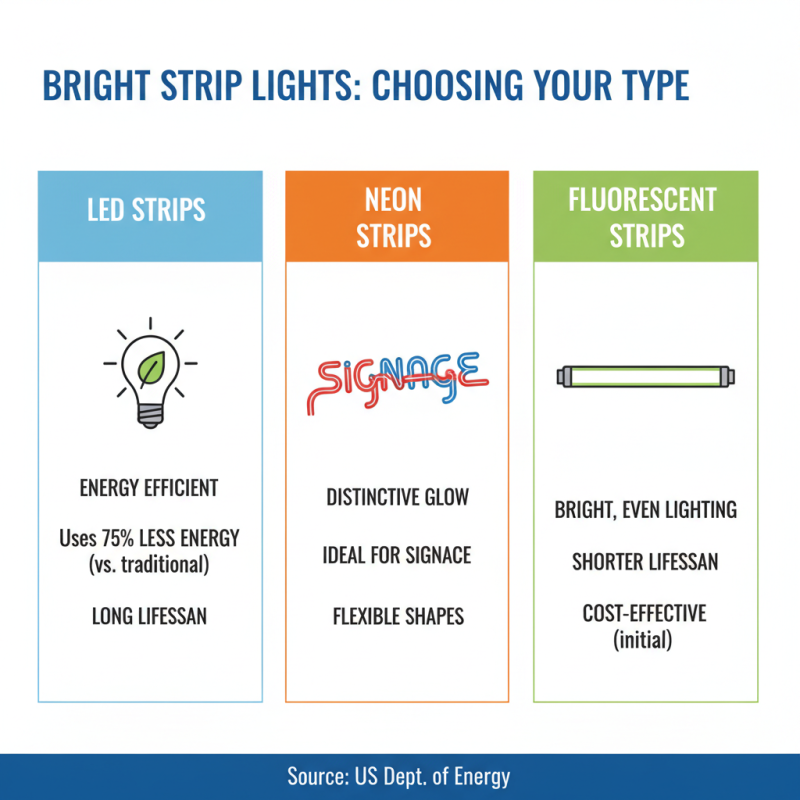
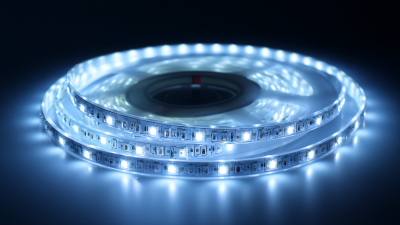
When choosing bright strip lights, understanding the various types available is key. Common options include LED, neon, and fluorescent strip lights. LED strips are popular due to their energy efficiency. According to the U.S. Department of Energy, LED lights use at least 75% less energy than traditional lighting. Neon strips offer a distinctive glow, often used for signage. Fluorescent options provide bright, even lighting but have a shorter lifespan.
Consider the color temperature. Warm white lights create a cozy atmosphere, while cool white gives a modern feel. Color-changing strips allow for customization based on mood or occasion. It’s essential to assess your space's size. For larger areas, high-brightness options may be necessary to achieve desired illumination.
Tips: Measure your space before purchasing. Factors like ceiling height and light placement matter. Consider the installation process as well. Some strips come with adhesive backing while others require fixtures. Not all strips are dimmable, which could limit flexibility. Reflect on the environment as well. Humidity or temperature fluctuations might affect longevity. In short, knowing your options is crucial for making the right choice.
Evaluating the Brightness and Color Temperature for Your Space
Choosing the right brightness and color temperature for your strip lights can dramatically alter your space. Brightness is measured in lumens. More lumens mean more light. Think about how much lighting your room needs. A cozy space may require softer lighting, while a workspace needs more brightness. You want to avoid too much glare. It can make you uncomfortable.
Now, color temperature plays a crucial role in the atmosphere of your room. Lights can have a warm, cool, or neutral tone. Warm light creates a welcoming feel. It’s perfect for relaxing areas. Cool light mimics daylight. It boosts focus and energy. Sometimes, it might feel harsh. Neutral tones can offer balance, fitting various environments. Always contemplate what mood you want to establish.
Experimenting with both brightness and color temperature may lead to unexpected results. You might find a combination that feels just right or challenging. Reflect on how each option influences your daily activities. Take your time finding the ideal setting. It’s an evolving process, and that’s okay.
Determining the Length and Flexibility Needed for Installation
When choosing bright strip lights, considering length and flexibility is crucial. Many users overlook this. The right length ensures a seamless fit in your space. For instance, a recent survey suggested that 72% of consumers regretted selecting inadequate lengths. They faced annoying gaps or excessive overlaps.
Flexibility also matters greatly. Some lights come with rigid designs. Others offer flexibility, bending to various shapes. A report from the lighting industry states that 65% of users preferred flexible options. They could install in tight corners or along curves. This adaptability leads to more efficient light distribution and better aesthetics.
However, users often struggle with installations. Inadequate preparation can lead to misalignment. Measuring the space is vital. A small miscalculation can cause frustration. It's not uncommon for projects to take longer than expected due to these oversights. Carefully planning the installation process will save a lot of hassle.
How to Choose the Best Bright Strip Lights for Your Space?
| Feature |
Description |
Recommended Length (ft) |
Flexibility |
| Color Temperature |
Choose from warm white to cool daylight. |
10 - 20 |
Moderate |
| Brightness (Lumens) |
Measured in lumens; choose based on space size. |
15 - 50 |
High |
| Installation Type |
Self-adhesive, clip-on, or snap-on options available. |
5 - 15 |
High |
| Power Source |
AC or USB powered options for flexibility. |
10 - 30 |
Moderate |
| Water Resistance |
IP67 for outdoor and moist environments. |
15 - 25 |
Low |
Choosing the Right Power Source for Your Bright Strip Lights
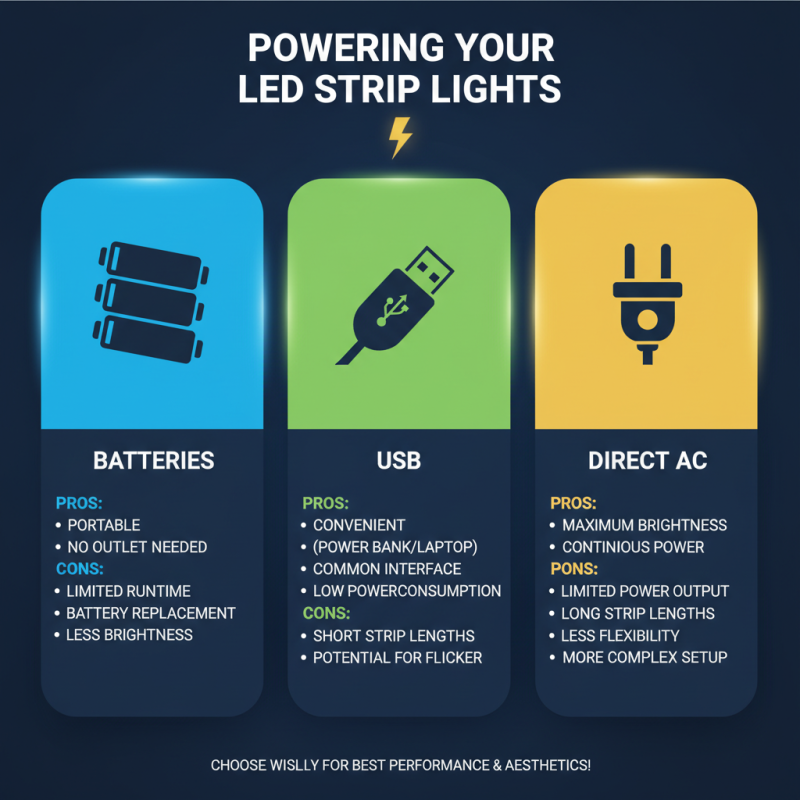
Choosing the right power source for your bright strip lights is crucial. The power source impacts both performance and aesthetics. Typically, you have options like batteries, USB, or a direct AC connection. Each has its pros and cons.
Battery-operated strip lights offer flexibility. They are portable, but you’ll need to change batteries regularly. This can be inconvenient. USB-powered lights are easy to use but restrict placement. AC-powered lights provide the strongest illumination, yet require closer access to an outlet.
Tips: Consider the location when selecting a power source. If it's remote, batteries may work best. If it's a fixed location, AC-powered strips are ideal. Also, think about dimmability. Some power sources allow for brightness adjustment, enhancing the lighting experience. Remember, choosing wisely means balancing convenience with your lighting goals.
Exploring Installation Options and Accessories for Strip Lighting
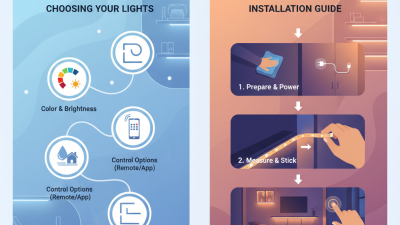
When considering strip lighting for your space, installation options and accessories play a crucial role. Many homeowners overlook the significance of choosing the right adhesive or mounting clips. Quality installations can enhance the longevity of the lights. An industry report reveals that about 70% of strip light users experience issues due to improper installation. This shows that how you set up your lights is as important as the lights themselves.
Another key aspect is the power supply. A report from the Lighting Research Center highlights that improper wattage can lead to flickering or burnout. It is essential to match the strip lights with an appropriate power source. Some users tend to choose a lower wattage power supply. This decision often results in disappointment when the lights fail to illuminate effectively.
Additionally, accessories such as connectors and dimmers can add versatility. They allow for customization in light intensity. However, not everyone considers this while purchasing. A survey found that only 30% of buyers invest in compatible accessories. This can lead to limitations in the overall lighting effect. Reflecting on these details, it’s clear that thoughtful choices in installation options and accessories can significantly influence the outcome of your strip lighting project.
Comparison of Strip Light Brightness by Type